 how-to
How to Verify Handcrafted Decor Quality: A 2026 Guide
Last Updated: October 23, 2026
Quick Summary
To verify handcrafted decor quality, inspect materials for density and flaws, examine joints and finishes for hand-applied variations, and ask the maker detailed questions about their process and materials. Authentic handmade work shows consistent technique with minor variations, evidence of tool marks, and strategic problem-solving that mass production cannot replicate at scale.
- Authentic handmade items show consistent technique with minor variations, tool marks, and intentional problem-solving that factory work cannot replicate.
- Check material density by pressing surfaces, inspect joints for gaps and alignment, and test finishes by gently scratching inconspicuous spots.
- Ask makers specific questions about their process, materials sourcing, time investment, and intended durability to reveal genuine craftsmanship.
- Request detailed multi-angle photos, process videos, and documentation from online sellers to verify handmade claims when shopping remotely.
- Examine ceramic glaze for hand-applied pooling and color variation, check clay body weight and structural integrity, and assess base finishing for signs of factory production.
Table of Contents
- Why Verifying Handcrafted Decor Quality Matters
- How to Recognize Authentic Handmade Work
- Building a Handmade Home Decor Quality Checklist
- Questions to Ask Before Buying Handmade Decor
- Handmade Ceramic Quality Checklist
- How to Assess Handmade Furniture Quality
- Verifying Provenance and Maker Claims
- Evaluating Handcrafted Decor Online
- Frequently Asked Questions
Why Verifying Handcrafted Decor Quality Matters
When you buy handcrafted decor, you're making a choice. You're choosing authenticity over mass production. You're choosing uniqueness over uniformity. But here's what most people miss: not everything labeled "handmade" actually is.
The difference between genuine handcrafted work and machine-made items designed to look handmade can be subtle. Mass producers have gotten better at faking the aesthetic. They add intentional imperfections. They use finishes that mimic hand application.
This guide covers how to verify handcrafted decor quality with confidence. We'll walk you through specific inspection techniques, red flags, and verification steps. By the end, you'll know exactly what separates authentic artisan work from clever imitations.
How to Recognize Authentic Handmade Work
Authentic handmade items carry signatures of human creation. These signatures are visible, consistent, and impossible to replicate perfectly at scale. Learning to spot them is your first defense against counterfeit claims.
Signs of Skilled Craftsmanship
True artisan work shows evidence of intentional skill and decision-making. The maker has solved problems. They've refined techniques. They've made deliberate choices about materials and methods.
Look for these signals:
- Consistent technique with minor variations. Hand-applied work repeats patterns but never perfectly. The variation is uniform, not random.
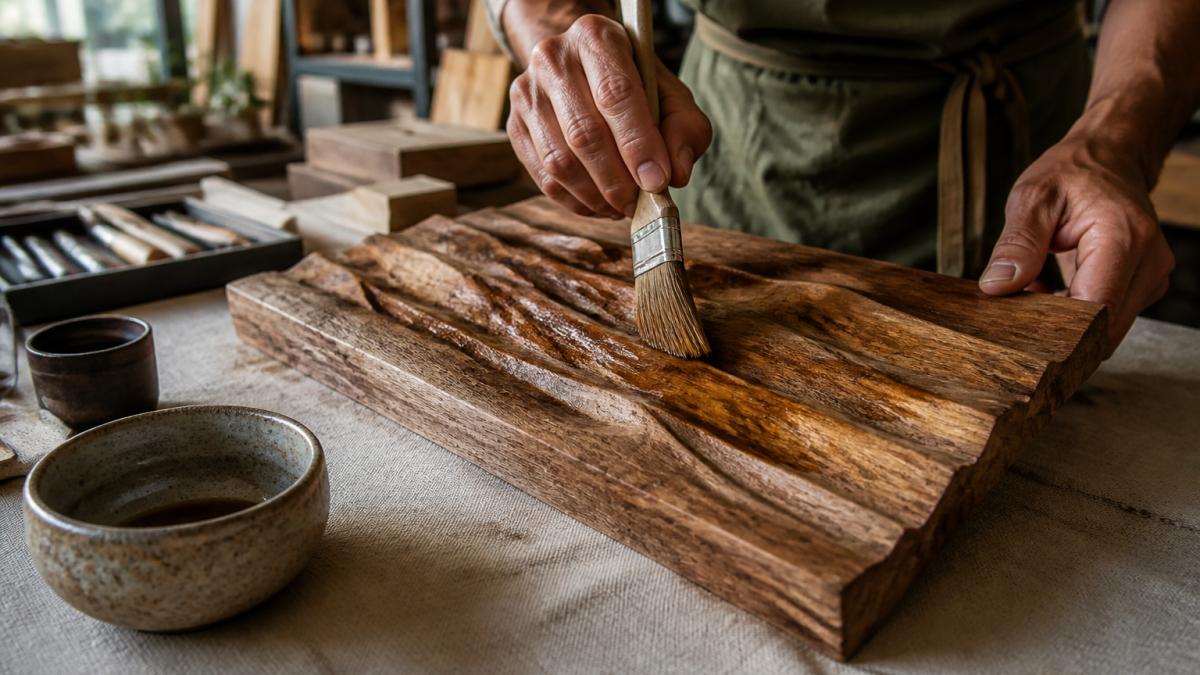
- Evidence of tool marks. Brush strokes, chisel marks, or hand-formed ridges show human touch points.
- Strategic problem-solving. Joints fit tightly. Edges align with purpose. Weak points are reinforced.
- Material selection that matches the form. Heavy materials for structural pieces. Lighter materials for decorative elements.
- Finishing that enhances, not masks. The maker lets material character show through. They don't hide the wood grain or ceramic body.
These details take time to develop. They can't be rushed. Mass production prioritizes speed, so these marks of patience are rarely present in factory work.
Authentic Variation Versus Defects
This is where most people get confused. Handmade items vary. But variation and defects are different things.
Authentic variation happens because the maker works by hand. Each piece responds slightly differently to the process. A ceramic glaze pools deeper in one spot. A wood stain absorbs unevenly. A stitched seam has subtle rhythm changes.
Defects break the pattern. A crack that compromises structure. A finish that flakes or peels. Alignment so far off that the piece doesn't function. Defects reduce durability or usability. They're mistakes, not character.
Ask yourself: Does this variation strengthen or weaken the piece? Does it look intentional or accidental? If you can't tell, ask the maker.
Building a Handmade Home Decor Quality Checklist
A systematic approach beats guesswork. Use a checklist to evaluate any handcrafted piece before buying. This method works whether you're shopping in person or online.
Material Inspection Steps
Start with the material itself. Quality handcrafted work begins with quality materials.
Step 1: Identify the material. Ask the maker directly. Don't assume. "Wood" isn't specific enough. Is it reclaimed oak? Sustainably harvested pine? Particle board with wood veneer?
Step 2: Check material density. Press your thumb into the surface. Quality wood resists. Soft or cheap wood dents easily.
Step 3: Look for material flaws. Knots in wood are normal. Cracks are not. Discoloration that's part of the design is fine.
Step 4: Assess material compatibility with intended use. Is the piece designed to hold weight? The material must support it. Is it exposed to moisture?
Construction and Finish Assessment
How the piece is built determines how long it lasts.
Step 1: Examine joints and seams. Gaps mean poor fit. Seams should align flush. Stitching should be even and tight.
Step 2: Inspect the finish application. Run your hand across the surface. Quality finishes feel smooth and consistent. Rough patches suggest incomplete sanding before finishing.
Step 3: Check for hand-applied variations. Brush strokes should show. Color should have slight variation. Edges should have minor imperfections. If the finish looks machine-perfect, it probably is.
Step 4: Test the finish durability. Gently scratch an inconspicuous spot. Does the finish chip easily? Quality finishes resist light scratching. Run your nail across the surface.
Questions to Ask Before Buying Handmade Decor
Direct communication with the maker reveals truth. Ask these questions. Listen to how they answer, not just what they say.
About the maker:
- How long have you been making this type of work?
- Can you describe your process?
- Do you make each piece individually, or do you use templates and repeat the same design?
About the materials:
- What specific materials did you use?
- Where did you source them?
- Why did you choose these materials for this design?
About the process:
- How long did this piece take to create?
- What's the most time-consuming part?
- Are there steps you can't automate or speed up?
About durability:
- What's the intended lifespan of this piece?
- How should the owner care for it?
- What conditions will damage it?
Genuine makers answer these questions with detail and confidence. They're proud of their work. If answers are vague or evasive, that's a warning sign.
Handmade Ceramic Quality Checklist
Ceramics require specific evaluation. The glaze, the clay body, and the firing process all affect quality.
Glaze and Surface Evaluation
Ceramic glaze is the protective and decorative layer. Quality glaze shows specific characteristics.
Look for glaze variation. Hand-applied glazes pool and flow. Color shifts slightly across the surface. This variation indicates hand work. Machine-applied glaze is uniform. Too-perfect consistency suggests factory production.
Check for glaze defects versus character. Tiny bubbles in glaze are normal. Crazing (fine cracks in glaze) can be intentional. Crawling (glaze pulling away from clay) is a defect. Bare spots where glaze didn't adhere are defects.
Feel the glaze surface. Quality glaze should feel smooth. Rough patches mean incomplete firing or poor application. The glaze should bond tightly to the clay body.
Structural Integrity for Ceramics
The clay body underneath the glaze matters as much as the glaze itself.
Examine the clay color and texture. Handmade ceramics show clay body variation.
Check the weight. Handmade ceramics are usually heavier than mass-produced pieces. Thicker walls and denser clay indicate quality. Light, thin-walled ceramics often crack or break easily.
Test for structural cracks. Look inside and outside. Run your finger along seams where pieces were joined. Cracks in the clay body are serious.
Assess the base. How is the bottom finished? Handmade pieces often show the clay body on the base. The base might be slightly rough.
How to Assess Handmade Furniture Quality
Furniture takes more abuse than wall art. Quality construction is essential.
Wood Grain and Material Density
Wood tells the story of the tree and the maker's choices.
Study the wood grain. Natural wood grain is unique. Each board has its own pattern. Machine-made furniture uses veneer or laminate with repeated patterns. Real wood shows variation.
Check material density by weight. Pick up the piece. Solid wood furniture is heavy. Lighter weight suggests hollow construction or cheap wood. Compare to similar pieces.
Look for wood movement evidence. Wood expands and contracts with humidity (ncbi.nlm.nih.gov). Quality makers account for this. Joints might show slight gaps in dry seasons. This is normal.
Inspect the wood finish. Does it enhance the grain or hide it? Quality finishes show wood character.
Joinery and Component Alignment
How pieces connect determines durability.
Examine joints closely. Mortise and tenon joints are strong and visible. Dovetail joints show craftsmanship. Butt joints with screws are weaker but acceptable.
Check alignment under stress. Gently push on the piece. Does it wobble? Solid joints stay tight. Loose joints indicate poor craftsmanship or wear. New furniture should never wobble.
Inspect hardware. Are screws and bolts visible or hidden? Quality makers use appropriate hardware for the load. Cheap furniture uses undersized hardware that loosens over time.
Test drawers and moving parts. Drawers should slide smoothly. Handles should be secure. Hinges should operate without squeaking. Rough movement indicates poor alignment or cheap components.
Verifying Provenance and Maker Claims
Online shopping makes verification harder. You can't touch the piece. You can't meet the maker.
Request maker credentials. Ask for a portfolio of previous work. Ask how long they've been making this type of item.
Ask for process documentation. Photos or videos of the maker at work are gold. These show you the actual process.
Check for consistency across listings. If a maker sells multiple items, do they show the same quality and style?
Verify through platforms. Etsy, for example, shows seller history. Read reviews from previous buyers. Do they mention handmade quality?
Ask about customization. Real makers can customize work. They understand their process well enough to adapt it.
Evaluating Handcrafted Decor Online
Remote shopping requires different verification strategies. You can't inspect the piece in person, but you have tools.
Request detailed photos from multiple angles. Ask for close-ups of texture, finish, and construction details.
Ask specific questions about the photos. Are the photos of the actual item you'll receive, or a sample?
Understand the return policy. Quality makers stand behind their work.
Look for video content. Some makers post videos showing their process. These build trust.
Check the seller's response time. Ask questions before buying. How quickly do they respond? Do they answer thoroughly?
Read recent reviews carefully. Look for specific details in reviews. "Beautiful piece" is vague.
Frequently Asked Questions
How can you tell if home decor is genuinely handmade?
Genuine handmade decor shows organic imperfections, color variation, and inconsistencies that mass production cannot replicate. Look for hand-applied finishes with slight unevenness, irregular stitching patterns, and variations in glaze or stain application. Check the maker's background, shop history, and production process documentation.
What should you look for when checking the quality of handmade decor?
Inspect material density and weight relative to size; quality handcrafted items feel substantial. Examine surface finish for smoothness and evenness, check component alignment and construction joints, and assess the overall form for intentional design rather than careless assembly. Test durability by gently flexing or tapping items if possible. For ceramics, look for consistent glaze without bubbling or cracking. For furniture, verify wood grain consistency and joinery strength. Ask the maker about their production process and intended use to confirm the item matches your needs.
What questions should you ask an artisan before buying handmade decor?
Ask about materials sourced and why they were chosen, the production timeline and hand-work involved, any finishing treatments applied, and care instructions for durability. Inquire about the artist's experience and background, whether they produce limited batches or one-of-a-kind pieces, and their return or warranty policy. Request photos of the actual item (not just a generic product shot) and ask how variations between pieces are handled. For digital or printed items, confirm resolution, file format, and printing specifications to ensure quality at your intended scale.
Are small variations in handmade decor a sign of poor quality?
No, organic imperfections and minor variations are hallmarks of authentic handcrafted work. Hand-applied finishes naturally show slight unevenness, glaze variations, and color patchy hues. Irregularities in stitching, texture, and form reflect the human touch and individual artisan technique. However, distinguish between intentional variation and defects: cracks, structural misalignment, or incomplete finishes indicate poor craftsmanship. Quality handmade items show consistent skill and intentional design despite their variations. Ask the maker to explain what variations are normal for their process versus what would be considered a flaw.
Buying handcrafted decor should feel confident, not risky. When you know what to look for, you spot authenticity. You avoid counterfeits. You invest in pieces that last and bring real joy to your home. At Twin Pines Media, we believe handmade quality is worth the effort to verify. Use this guide to evaluate every piece. Ask the questions. Inspect the details. Trust the process. Your home deserves genuine craftsmanship.